Metamorphosis
2024
carved pine
2’ x 6” x 3”
1 lb
Metamorphosis is a comparison between the stages of metamorphosis in a White Pine Weevil’s life span and the process of carving wood. Each stage of the life cycle is carved in progressively more detail.
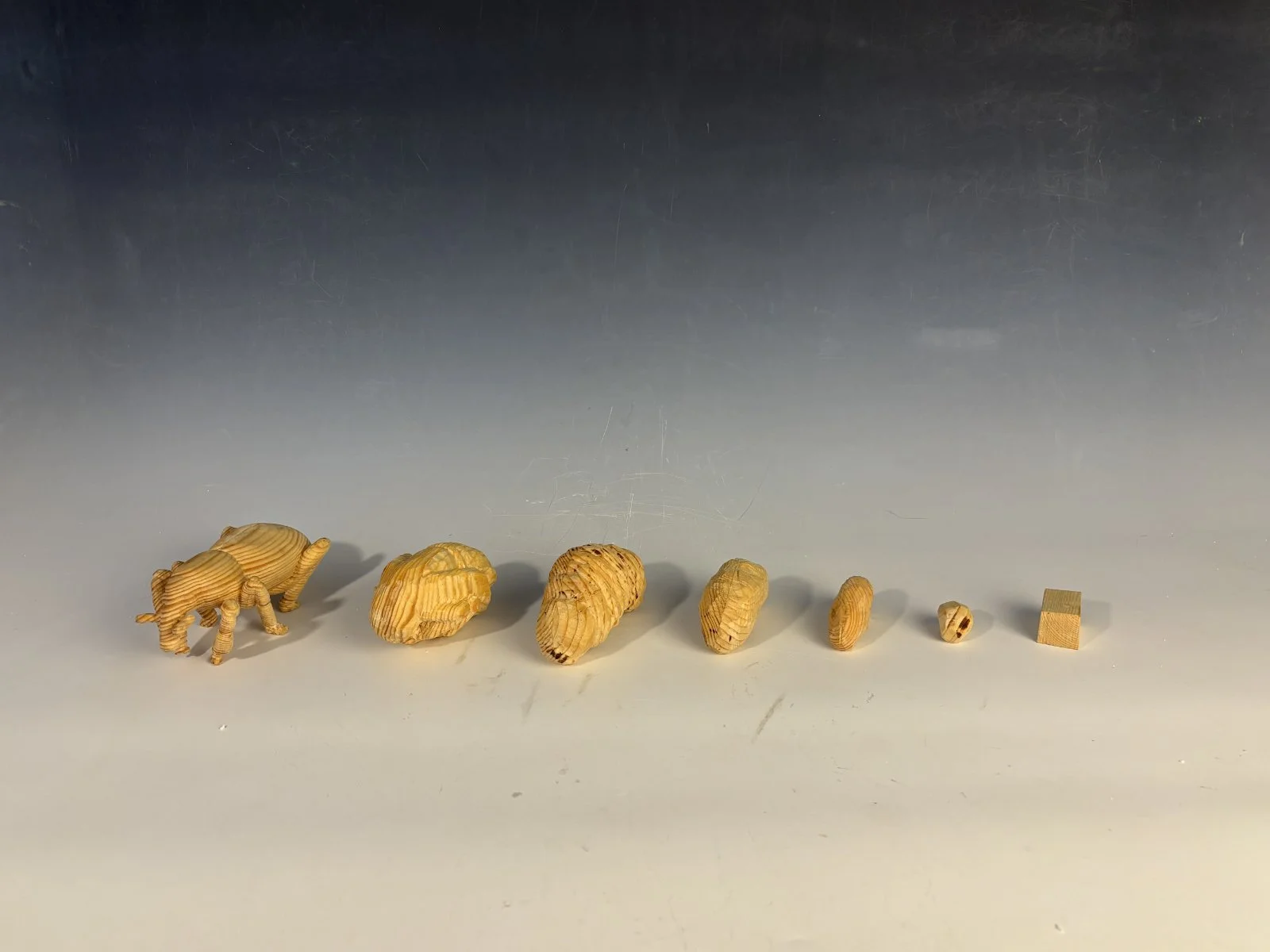
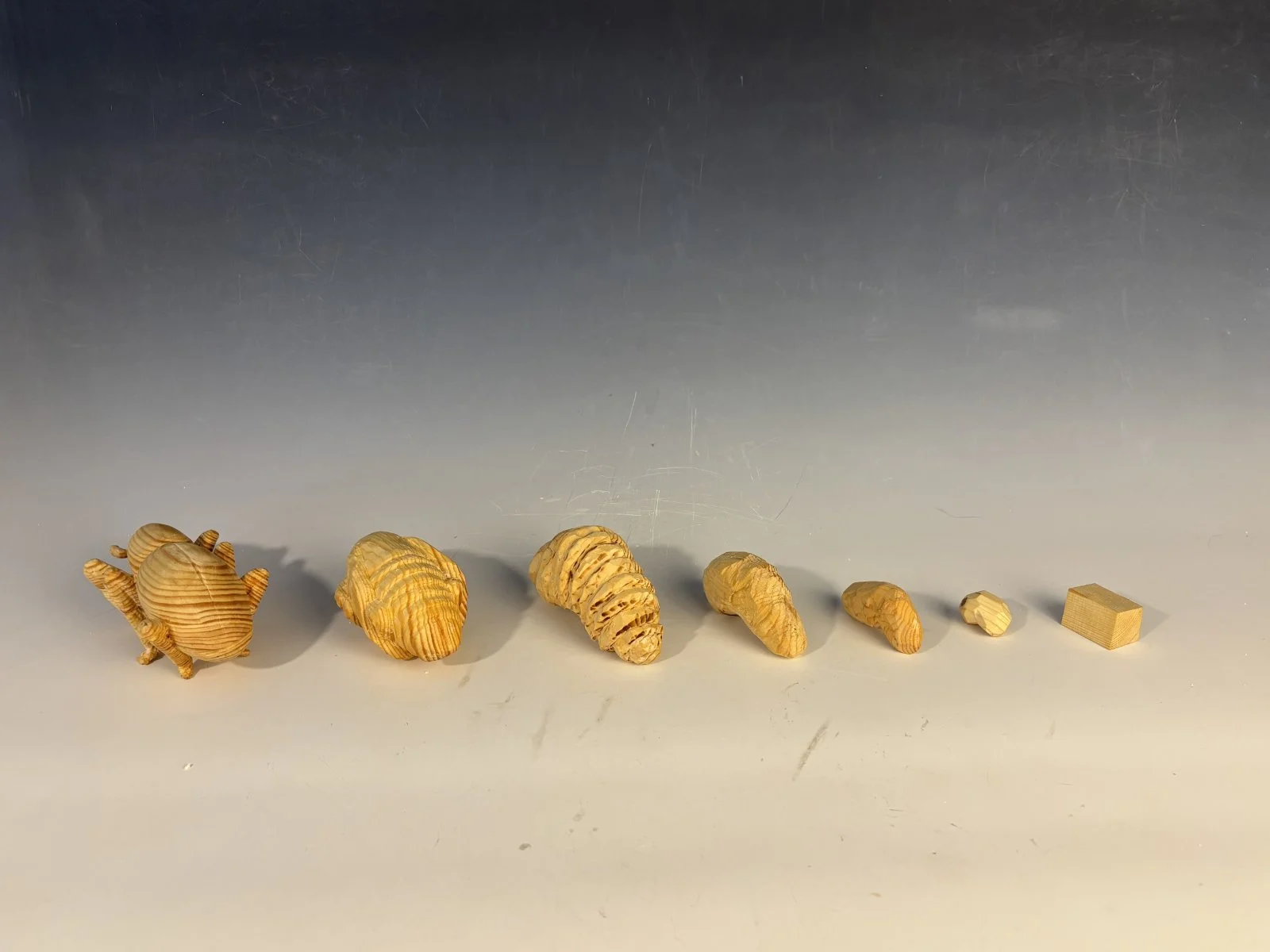
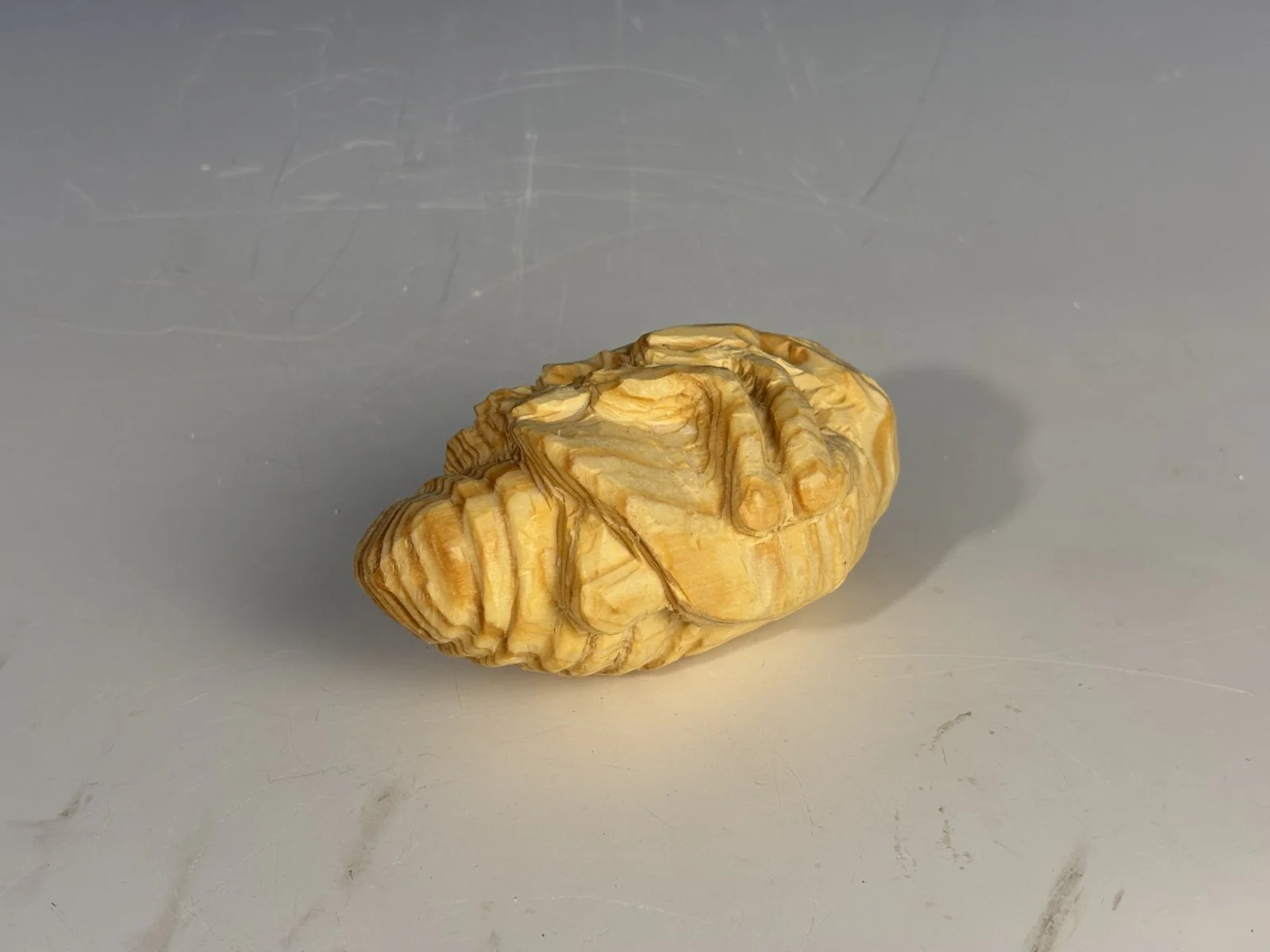
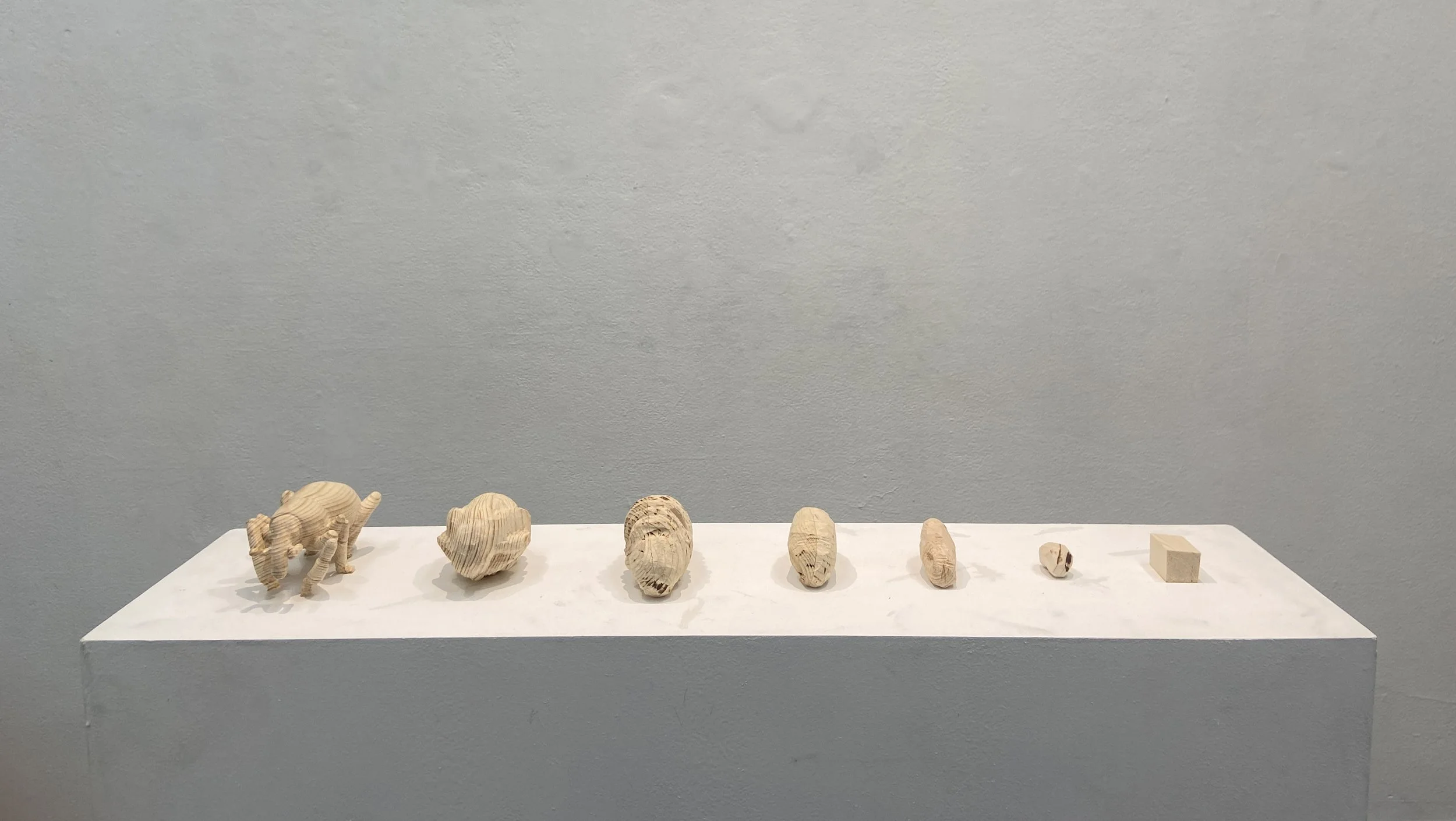
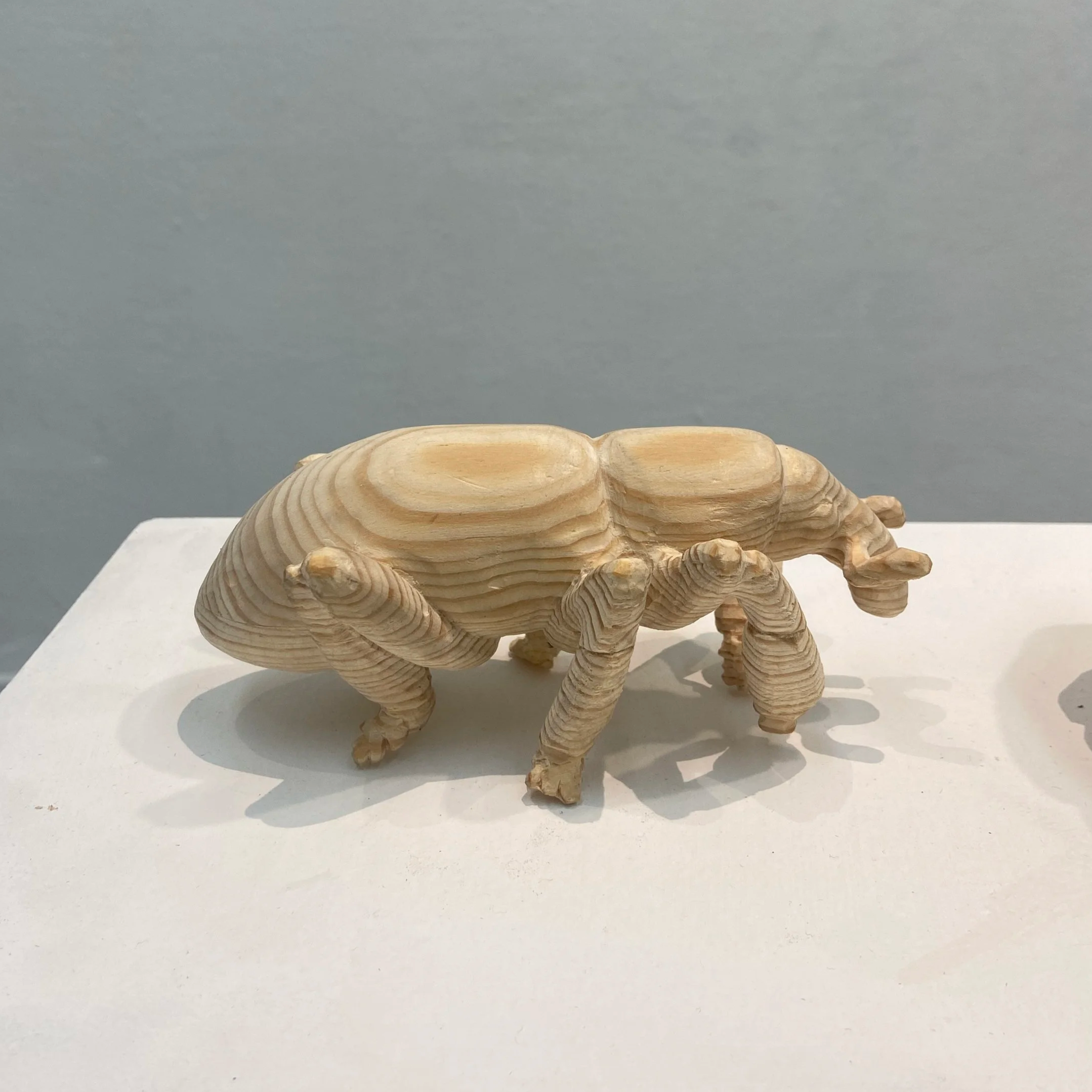
As I first started carving these forms from wood, I rounded them out into their basic shapes the first day, and realized they looked like eggs. I was already thinking about insect life cycles, but wondered why not to have my insect hatch from a rough egg shape like this? Working with material at its rawest form is when I consider it the most. I did not want this series to feel purely representational, but did not know how to approach this until considering my material I was working with. As I carved this form from wood into its future form/self, it essentially goes through a metamorphosis of its own. The act of carving becomes part of the process for this sculpture to exist. Considering the act of subtractive carving as an egg, larval stage, pupa and adult, I figured the earlier the stage, the less focus, detail, and rendering would be attributed to the insect. With this in mind, I performed one step of my carving process for each stage of the White Pine Weevil’s metamorphosis. I chose the WPW because it eats, burrows into, and essentially carves away at white pine, the same material I carved into for this piece.
Both the act of carving and the process of metamorphosis share this notion of change, and instinctual, driven change at that. The form reveals itself in the wood through the act of carving. So does the insect, it changes, molts, and eventually pupates and metamorphosizes into its adult form. Neither the wood nor the insect have much say in this outcome.
In this project, I wanted to examine my wood carving techniques and push my skills to their limits. In making each phase of the insect’s life another step closer to the finished project, I was able to analyze what choices and methods I use to achieve certain levels of detail, and with what speed I could change the wood into that form through each method. The first phase, the egg/uncarved form was made using the bandsaw. Then was the first instar, made on the disk sander. After this came roughing it out with an angle grinder, then further roughing it out with angle grinder, with some rough dremel carving done for the second to last larval stage. The grub, or final instar/larval stage was carved using a more patient and involved level of dremel carving. The pupa was done with small detailing bits, and the final, adult stage was created using hand carving knives and then sanded. Each of these individual pieces used the process or method of the ones before it, plus a new level of detail and technique. In this way, I was able to create a piece that examines the act of carving, and the steps it takes to bring a piece to completion, from raw wood to intricate form. The process felt tied to this piece as much as the forms themselves. Crafting the beetle’s life stages in this way insinuates the adult stage is the completion of the insect’s life cycle, which makes sense. Still though, I wonder how I could make this work feel more cyclical, because these insect life spans don’t end in adulthood. Eggs are laid, hatched, and then new larval insects emerge. The process repeats itself over and over again.